
Last updated September 22, 2026
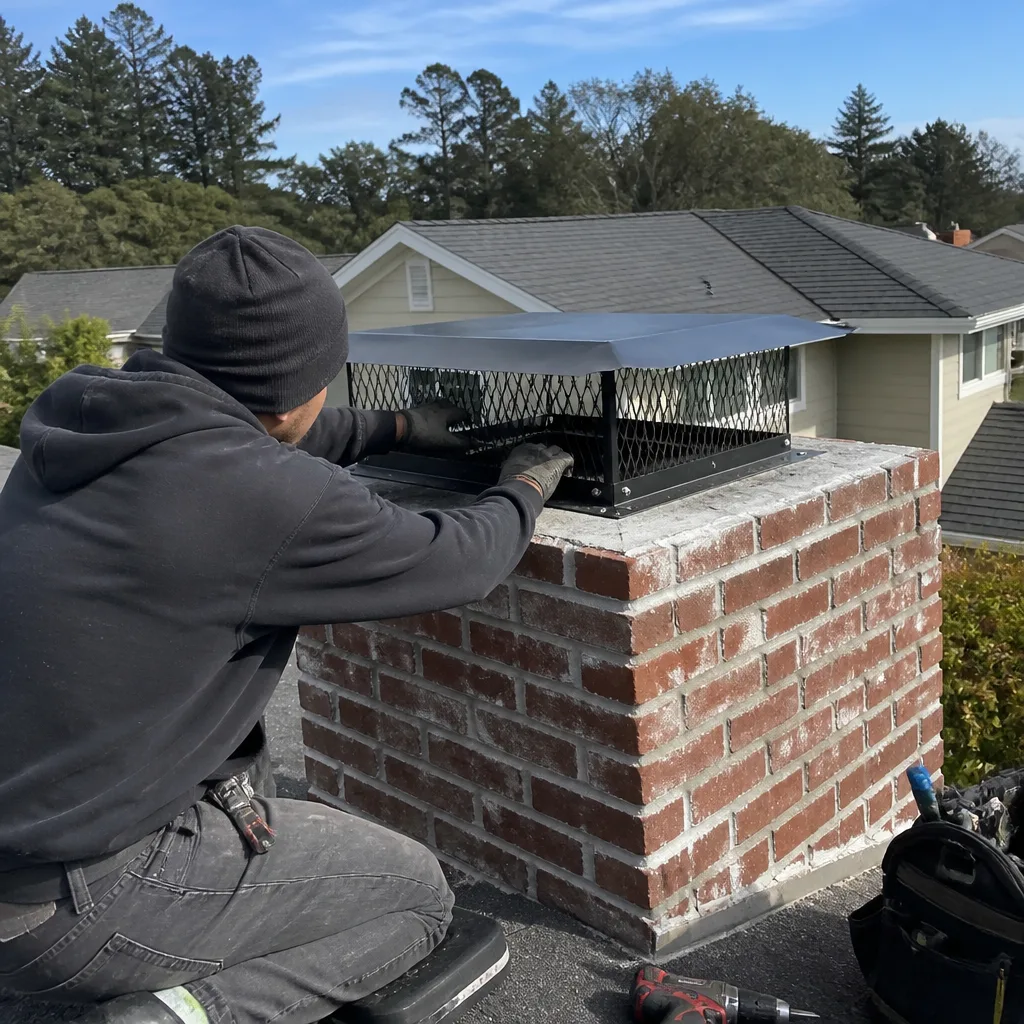
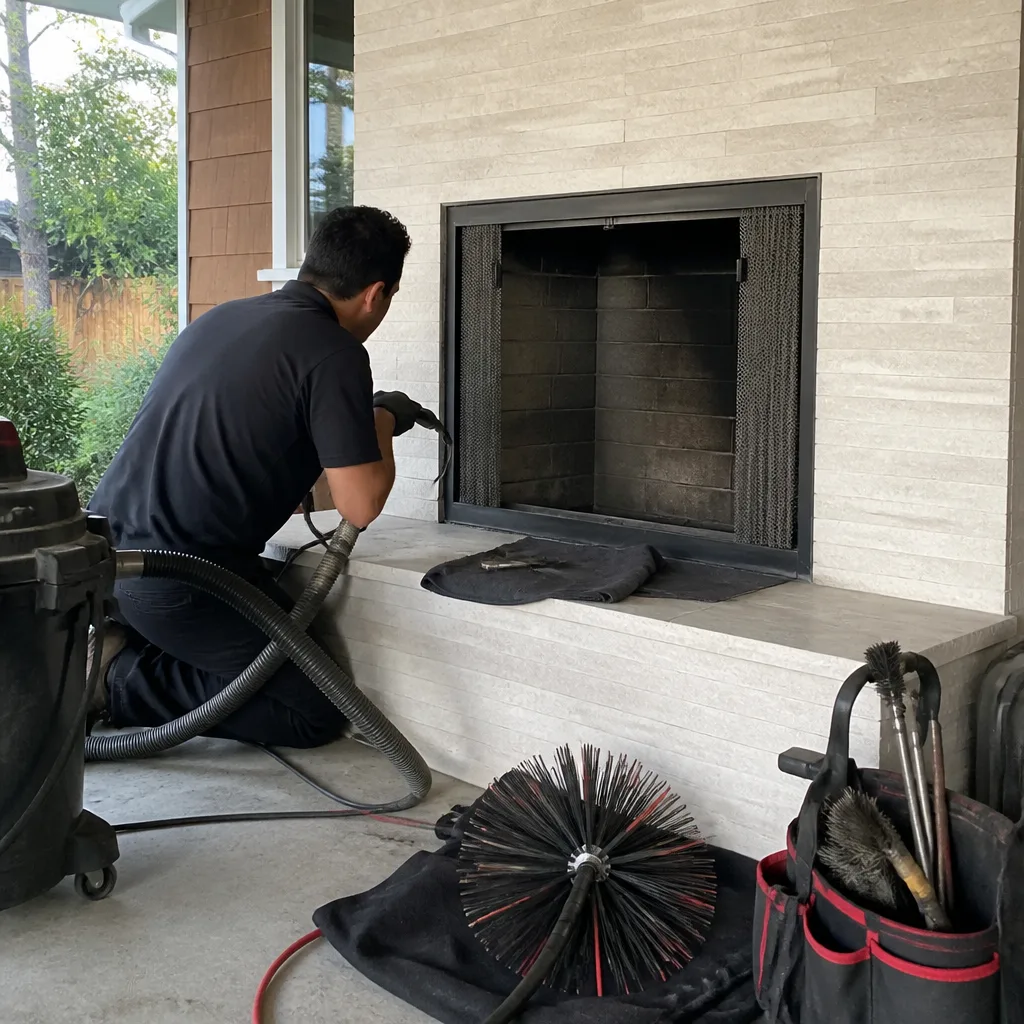
Level 1 sweep and inspection to the NFPA 211 annual standard - flue, crown, cap, and flashing checked and photographed
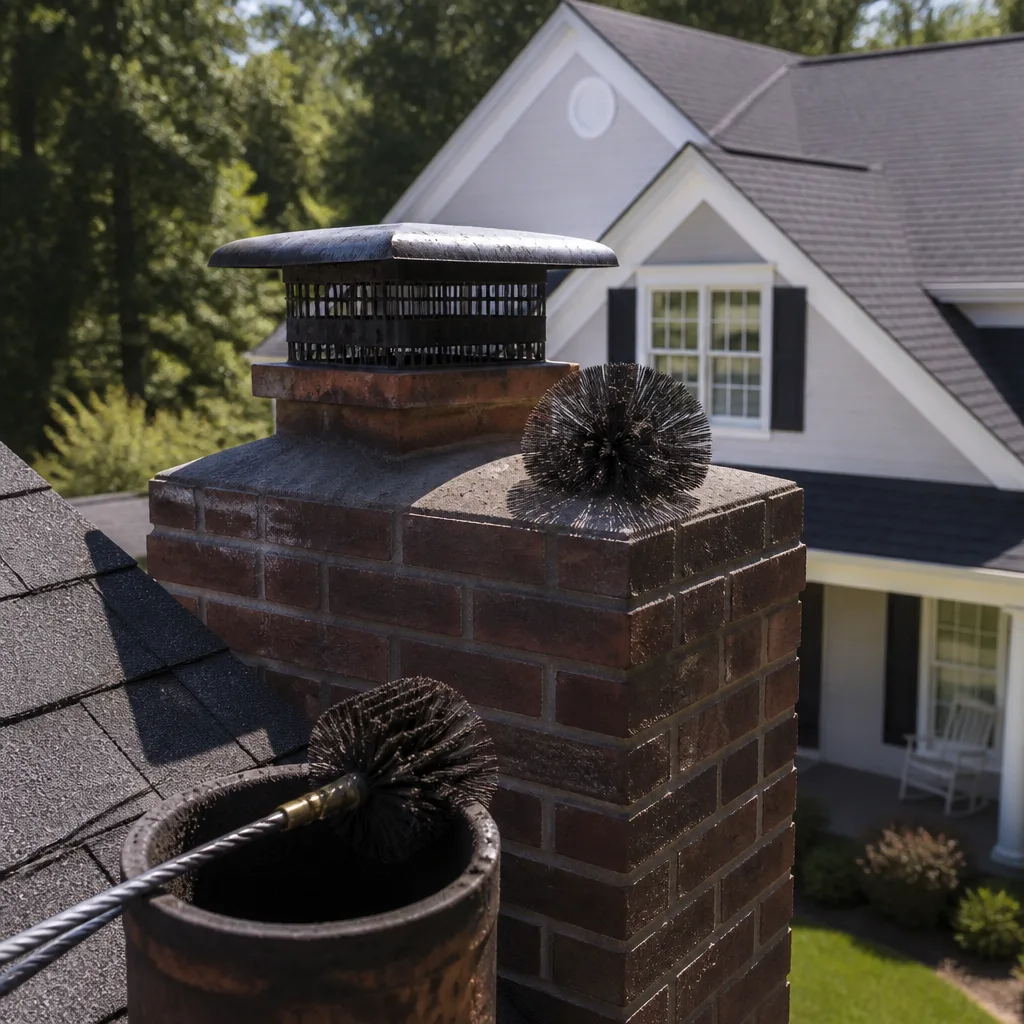
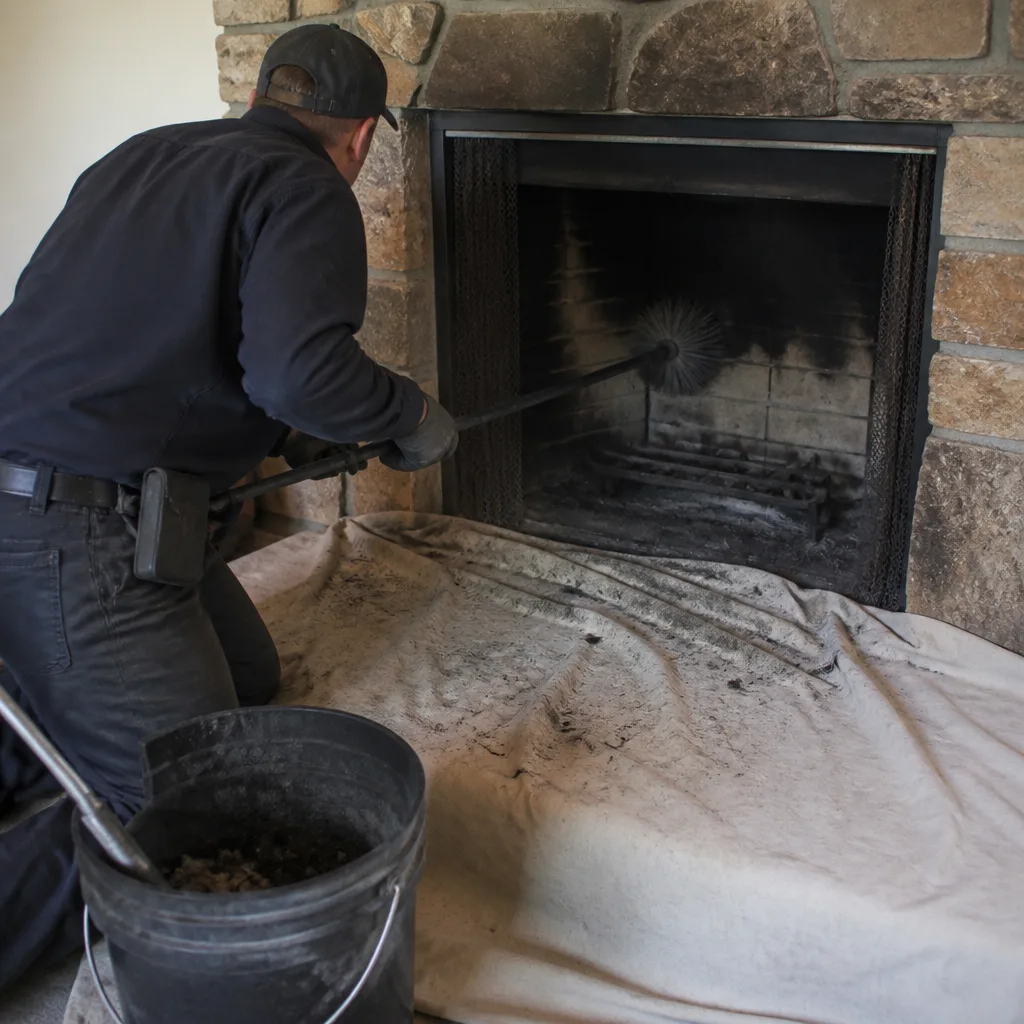
Chimney sweep logs do not sweep chimneys. They loosen some creosote - which then falls where a brush and vacuum still have to collect it.
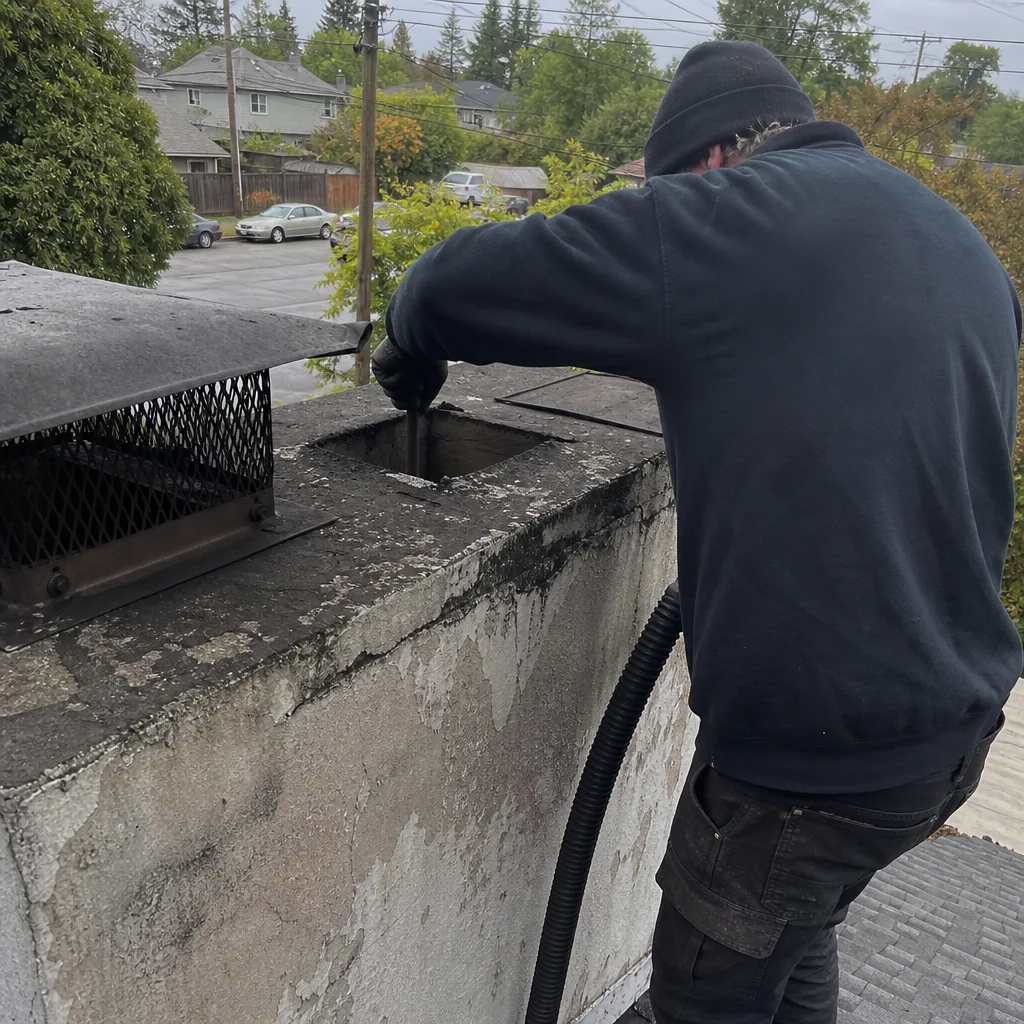 Before
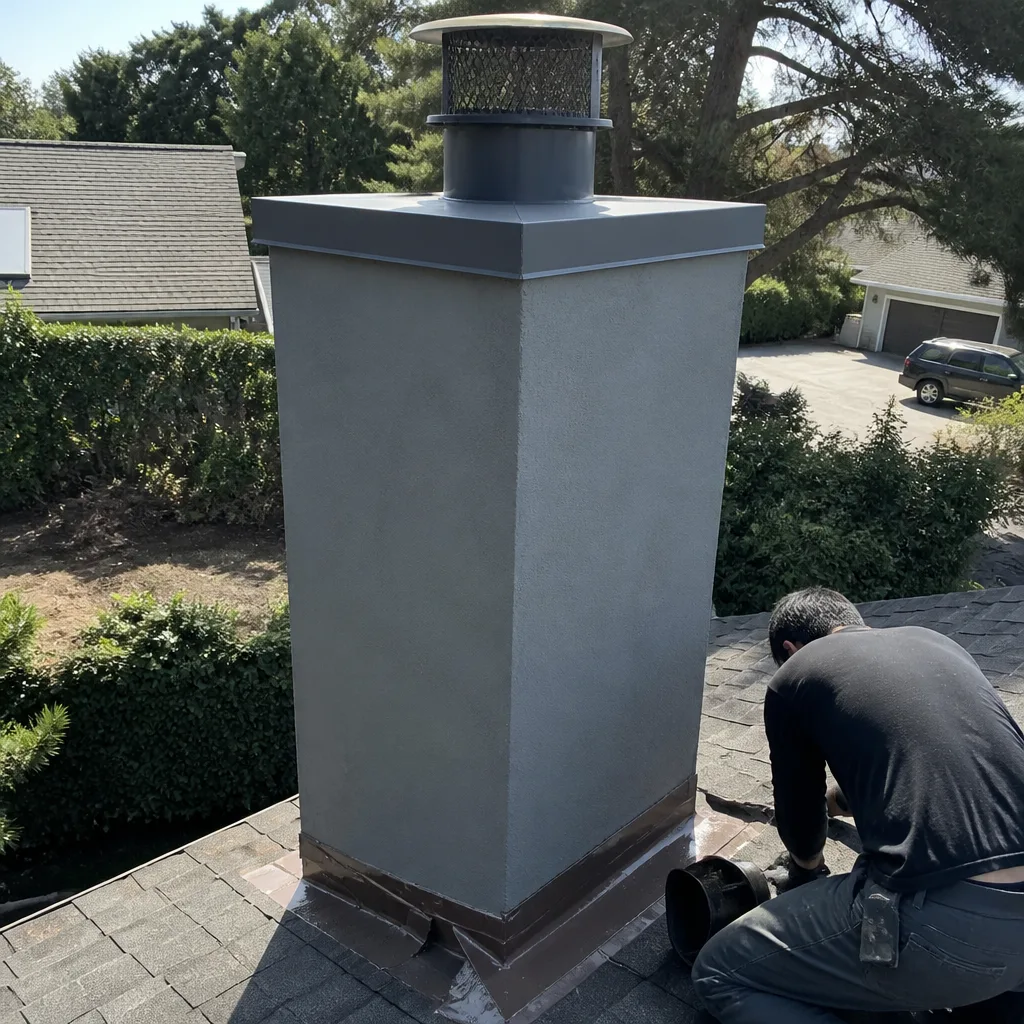 After
After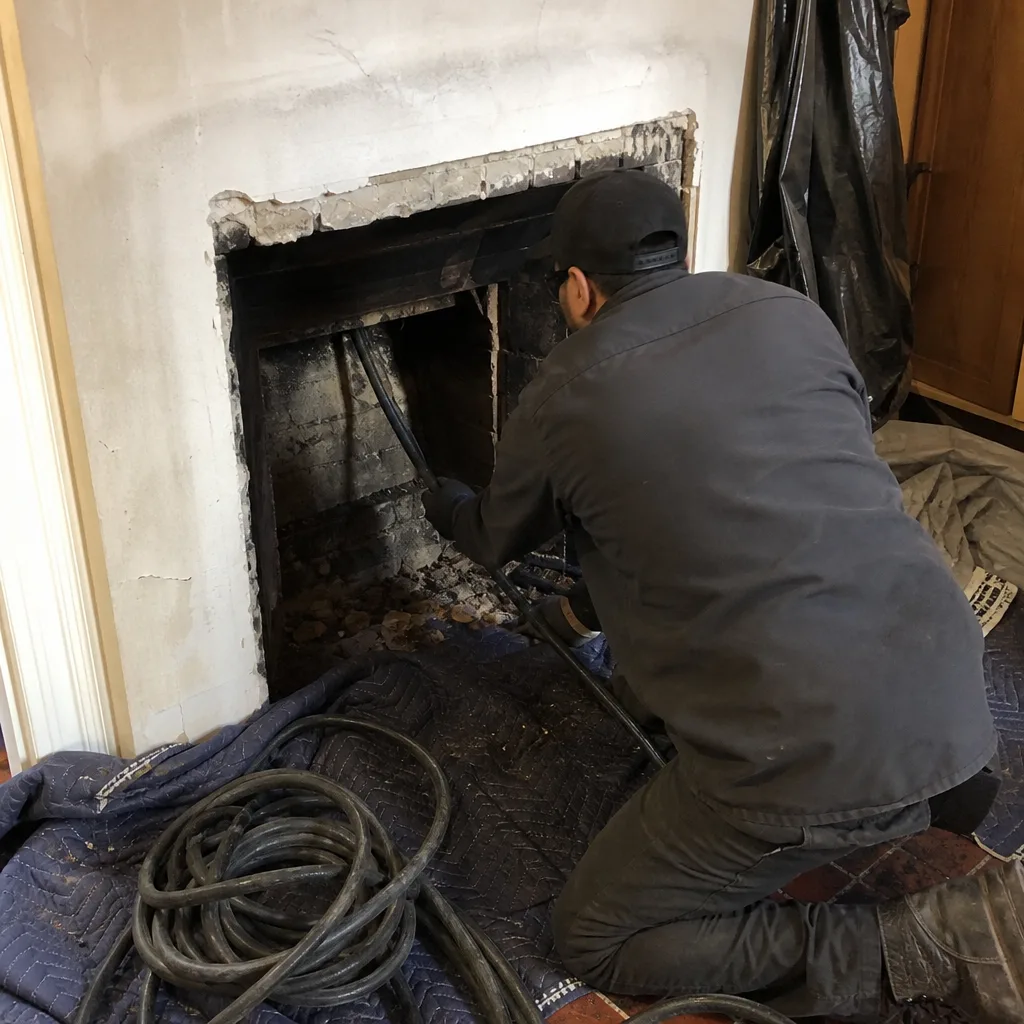 Before
 After
After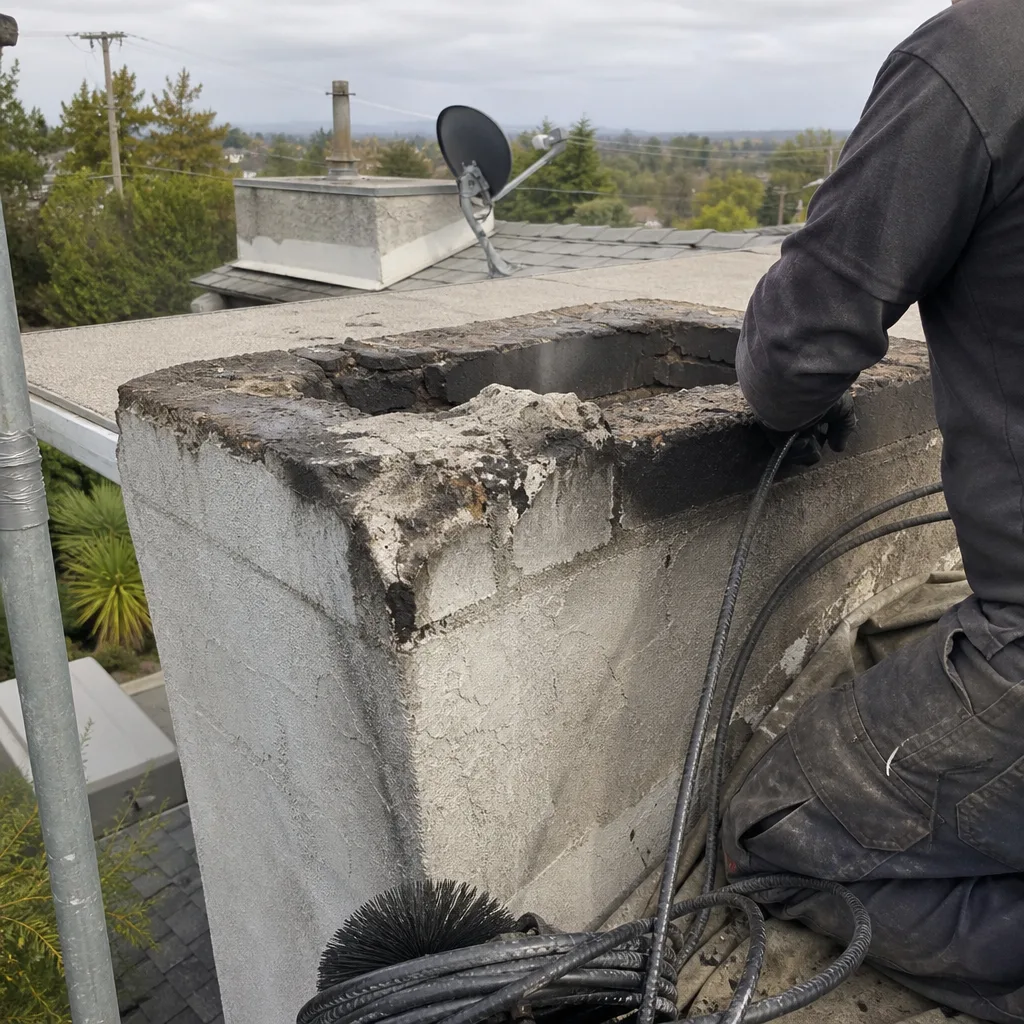 Before
 After
AfterChimney Cleaning Warning Signs: A San Mateo Homeowner’s Reference Guide
A white stain on your exterior brick isn’t cosmetic - it’s efflorescence, and it means water has been moving through your masonry long enough to carry dissolved salts to the surface. By the time you notice it, the cleaning problem is already months old. In San Mateo, where marine air keeps masonry damp through October and sudden dry winds crack it by February, chimney warning signs develop quietly. Homeowners here often mistake slow draft loss for “just how this fireplace is,” or assume a musty smell after rain is normal for an old house. This guide - along with more guides & resources on our blog - shows you what we’ve documented across 38,000 chimney inspections since 2009: the specific mechanisms behind eight visual, three smell-based, four draft-related, and three sound-based warning signs, what each one actually means for your flue, and whether the right response is a scheduled sweep or an immediate stop-use.
Quick Answer
The most critical chimney warning signs in San Mateo homes are: white efflorescence stains (water intrusion), black oily streaks above the firebox (Stage 2 creosote), and smoke rolling back into the room (draft failure). These indicate active hazards - water damage, chimney fire risk, and carbon monoxide exposure - that require NFPA 211 Level 2 camera inspection before the next burn. A standard sweep alone won’t address the underlying mechanism.
Table of Contents
- Eight Visual Warning Signs You Can Read from Ground Level
- Smell-Based Warnings San Mateo Homeowners Misattribute
- Draft and Performance Warnings in Peninsula Homes
- Sound-Based Warnings: What Popping, Scratching, and Rumbling Mean
- The Documentation Threshold: Clean-and-Monitor vs. Immediate Stop-Use
- Common Mistakes to Avoid
- When to Call a Professional
- Frequently Asked Questions
 Before
 After
AfterEight Visual Warning Signs You Can Read from Ground Level
Every sign below is something you can spot without climbing. We’ve organized them by what you’re actually seeing, the failure mechanism behind it, and whether the response is a scheduled service or urgent intervention.
1. White Powdery Stains (Efflorescence)
What you’re seeing: A chalky white deposit on exterior brick, often starting at mortar joints and spreading in vertical streaks. In San Mateo’s Baywood-Aragon and Hillsdale neighborhoods, we see this most on south-facing chimneys where morning fog lingers and afternoon sun drives rapid evaporation.
The mechanism: Water has penetrated the masonry, dissolved soluble salts from mortar and brick, and carried them to the surface. The salt crystallizes as water evaporates. This means your crown, cap, or mortar joints have failed - and water has been cycling through freeze-thaw expansion, widening cracks with every cold night.
The response: Stop-use isn’t required, but don’t schedule a standard sweep until the water entry is resolved. Water + creosote = accelerated corrosion of metal liners and spalling (surface flaking) of clay flue tiles. We document the efflorescence pattern with photos, trace the water path with camera inspection, and quote crown repair or tuckpointing in writing before any cleaning. Materials from Chimney Repair in San Mateo suppliers like Copperfield and Famco are specified by name in that written scope.
2. Black Oily Streaks Above the Firebox
What you’re seeing: Shiny black or dark brown vertical streaks on the fireplace face, especially at the lintel (the horizontal support above the opening).
The mechanism: This is Stage 2 creosote - not the dry, flaky ash of Stage 1, but a tar-like deposit that melts and runs when heated. It forms when wood burns at low temperatures with insufficient oxygen, common in San Mateo when homeowners damp down fires overnight for “all-night burn.” Stage 2 creosote has a lower ignition temperature than Stage 1 and burns with intense heat if ignited.
The response: Stop using the fireplace. This requires chemical treatment (spray-on creosote modifier that converts tar to brittle ash over 1-2 weeks) followed by mechanical removal. A standard wire-brush sweep won’t touch Stage 2. We quote this as a two-visit process under the Haven Standard: treatment application, then removal after curing, with photo documentation at both stages. For context on when this level of intervention becomes necessary, see DIY vs Professional Chimney Cleaning: The San Mateo Homeowner’s Decision Guide.
3. Spalling Brick Faces
What you’re seeing: Brick surfaces flaking off in curved sheets, exposing the rough interior. Often concentrated on the top third of the chimney, above the roofline.
The mechanism: Water has entered the brick, frozen, and expanded. San Mateo’s temperature swings - 40°F overnight lows followed by 65°F afternoons in January - create ideal freeze-thaw cycling. The brick face pops off because the outer layer has absorbed more water than the interior.
The response: Stop-use if flaking is severe enough to expose mortar joints, as structural integrity is compromised. Otherwise, schedule repair before the next burn season. Spalling above the roofline usually indicates crown failure; lower spalling suggests failed pointing or a missing cricket (the peaked flashing that diverts water around the chimney on sloped roofs). Our camera inspection determines whether the flue liner is also compromised by water entry.
4. Rust Stains on the Firebox or Damper
What you’re seeing: Orange-brown discoloration on metal components, sometimes with pitting.
The mechanism: Water is entering from above and reacting with steel or cast iron. In San Mateo’s older homes near Central Park and the train corridor, we’ve found rusted dampers in chimneys with otherwise sound exteriors - the water entered through a cracked flue liner and condensed on the metal, not through the masonry at all.
The response: Camera inspection required. Rust on the damper means water has traveled the full flue height. We document liner condition with photo record under Haven Standard Clause 4. If the liner is cracked, replacement with a stainless steel system (we source DuraFlex and Olympia Chimney materials) is quoted in writing before any cleaning proceeds. How to Hire a Chimney Cleaning Contractor in San Mateo: A Step-by-Step Guide covers what to expect from written quotes like these.
5. Cracked or Missing Mortar Between Flue Tiles
What you’re seeing: Visible from the firebox with a flashlight - gaps between rectangular clay flue segments, or shards of tile in the ash dump.
The mechanism: Thermal shock from rapid heating, or structural settling. San Mateo’s proximity to the San Andreas fault means minor seismic settling is continuous; we’ve documented more flue tile displacement here than in inland Bay Area markets.
The response: Immediate stop-use. Gaps between tiles allow combustion gases to enter wall cavities. This is liner failure, and it requires replacement before any burning. Our NFPA 211 Level 2 inspection determines whether the full flue needs relining or if a partial repair with HeatShield cerfractory foam is viable. We quote both options in writing.
6. Discoloration or Warping of the Surrounding Wall
What you’re seeing: Bubbling paint, stained drywall, or heat-warped trim near the fireplace or chimney chase.
The mechanism: Heat or moisture is escaping the chimney system at a breach point. In San Mateo’s 1970s-1980s tract homes in Shoreview and Marina Lagoon, we’ve traced wall discoloration to factory-built metal chimneys with missing chase covers - water entered the chase, saturated insulation, and wicked into interior walls.
The response: Stop-use until the breach is located. This requires full Level 2 inspection including attic access to trace the chimney path. We document thermal patterns with photos and provide written scope for chase cover replacement, flashing repair, or full chimney rebuild as indicated.
7. Debris or Nesting Material at the Cap or Top of the Flue
What you’re seeing: Twigs, leaves, or straw visible from below or protruding from the cap screen.
The mechanism: Birds, squirrels, or raccoons have accessed the flue. In San Mateo, Norway rats are particularly active in fall, and we’ve removed nests from chimneys backing onto the Bay Trail greenbelt. Nesting material is tinder-dry and highly combustible.
The response: Stop-use. Nesting material can ignite from a single spark, and animals may block the flue entirely, causing carbon monoxide backup. We remove debris with specialized tools, install a proper cap with minimum 5/8″ mesh (California code for wildlife exclusion), and document the flue condition post-removal.
8. Glazed, Puffy, or Honeycomb Deposits on Interior Flue Walls
What you’re seeing: Only visible during inspection - but you may notice fragments falling into the firebox, or a glassy reflection when you shine a light upward.
The mechanism: This is Stage 3 creosote, also called “glazed” creosote. It forms from repeated low-temperature burns that partially ignite creosote layers, baking them into a hard, insulating shell. The honeycomb structure traps heat and accelerates buildup. It’s the most dangerous form - ignition temperature is approximately 450°F, easily reached in normal operation.
The response: Immediate stop-use. Stage 3 removal requires rotary mechanical cleaning with chains or whips, often with chemical pretreatment. We quote this as a dedicated service, not a standard sweep, and document the before/after flue condition with camera record under Clause 4.
Smell-Based Warnings San Mateo Homeowners Misattribute
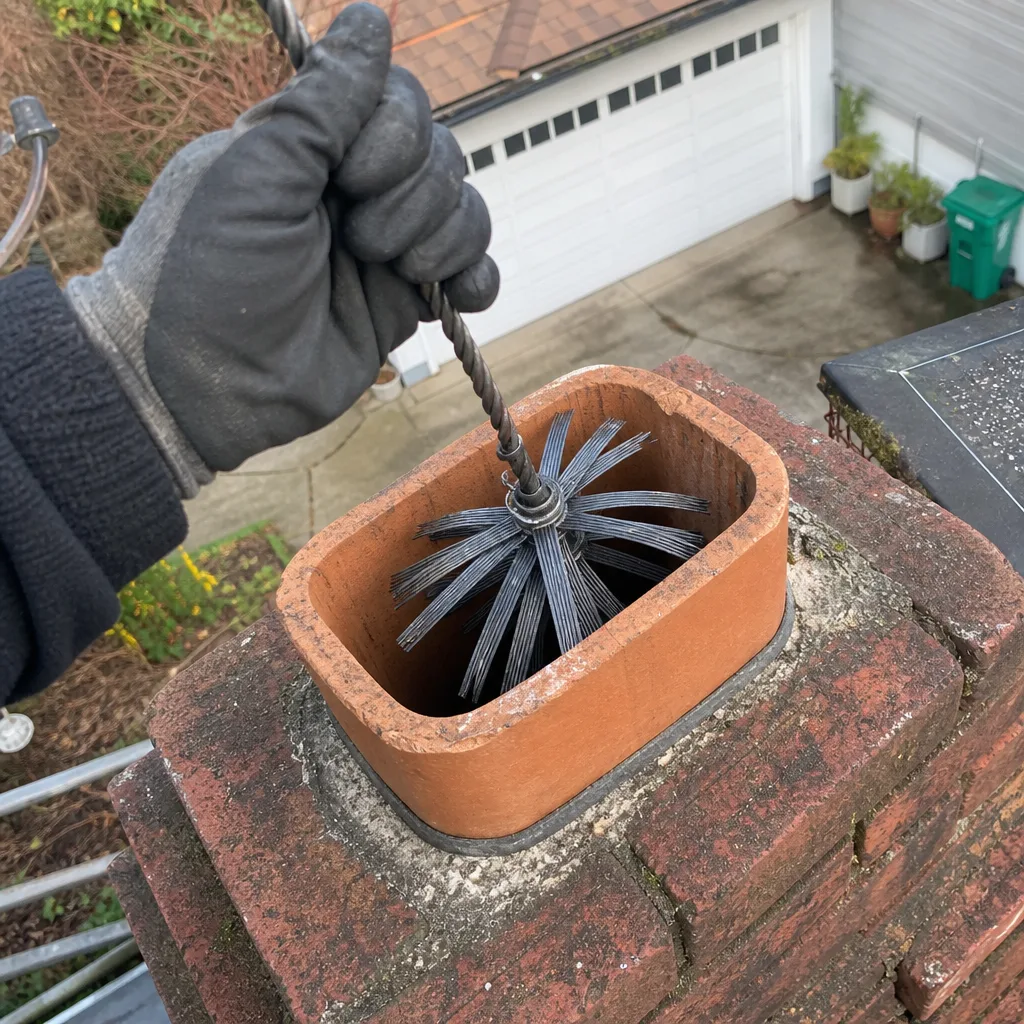
Smell is the most reported and most misunderstood warning sign. San Mateo’s marine climate creates specific confusion: the persistent dampness of winter makes musty smells seem normal, while the dry summer wind makes acrid smells seem like they’ll “air out.”
Musty-Cold Smell: Moisture Infiltration
The smell: A damp, earthy odor, stronger after rain or in the morning, often described as “like a basement.” Most noticeable when the damper is first opened.
The mechanism: Water is present in the flue system, supporting mold or mildew growth on creosote deposits or masonry. In San Mateo, where average humidity hovers near 75% through winter, a chimney with any cap or crown deficiency becomes a moisture reservoir. The smell intensifies when the damper opens because it disrupts the stagnant air column.
The intervention: Not a sweep issue alone. We camera-inspect to locate the water entry point, document mold presence, and quote cap/crown repair plus cleaning. If mold is extensive, we recommend a certified mold remediation contractor before our work proceeds.
Sharp-Acrid Smell: Stage 2 Creosote Off-Gassing
The smell: A chemical, tar-like odor, sharper than wood smoke, sometimes described as “like asphalt” or “burning plastic.” Often stronger when the fireplace hasn’t been used for days.
The mechanism: Stage 2 creosote is volatile at room temperature. The semi-liquid tar releases hydrocarbon vapors that travel down the flue and enter the living space through the firebox or any air leak in the system. This is not “old fireplace smell” - it’s active off-gassing from a combustible deposit.
The intervention: Stop-use. This smell means Stage 2 creosote is present in quantity sufficient to volatilize. Standard sweeping won’t remove it. We apply creosote modifier, schedule the follow-up mechanical removal, and document flue condition at both stages.
Sour-Smoky Smell After Rain: Negative Pressure Pull
The smell: A stale smoke odor that enters the house during or after rain, even without a fire burning.
The mechanism: Rain cools the exterior flue, creating a temperature differential that reverses the normal stack effect. If your home has been weatherstripped or upgraded with new windows (common in San Mateo’s 2015-2025 home purchases), the interior may be under negative pressure relative to the flue. The reversed air column pulls old creosote odors down into the living space.
The intervention: This is often a draft system problem, not a cleaning problem. We measure draft pressure, inspect for blocked or improperly sized flue, and may recommend a lock-top damper or makeup air solution. Cleaning alone won’t resolve negative pressure pull.
Draft and Performance Warnings in Peninsula Homes
Draft problems are the warning signs most likely to be dismissed as “just how this house is.” But a fireplace that once drew well and now doesn’t has changed for a reason. In San Mateo, the most common reason isn’t the chimney - it’s the house envelope.
Smoke Rollback into the Room
What you’re seeing: Smoke entering the living space during lighting, or when adding logs.
The mechanism: Several possibilities, ranked by frequency in our San Mateo inspections:
- Competition for combustion air. Modern weatherstripping, range hoods, and bathroom exhaust fans depressurize the house. The fireplace can’t establish upward flow against negative pressure. We see this constantly in renovated homes in Beresford Park and Hayward Park where original windows were replaced with tight vinyl units.
- Flue obstruction. Creosote buildup, nesting material, or structural collapse reducing flue diameter.
- Temperature differential too low. A cold flue on a mild San Mateo evening (common in our climate) doesn’t establish sufficient stack effect. Pre-warming the flue with a rolled newspaper torch often resolves this.
- Improper firebox-to-flue ratio. Common in insert installations where a metal insert was placed in an open fireplace without a properly sized liner.
The intervention: We start with draft pressure measurement, then camera inspection to rule out obstruction. If the flue is clear, we evaluate house pressure balance and quote solutions from lock-top dampers to dedicated combustion air intakes.
Delayed Ignition or Difficulty Starting
What you’re seeing: Kindling smolders without flame, or flames are weak and orange rather than vigorous and yellow.
The mechanism: Insufficient oxygen reaching the fuel, or excessive moisture in wood. But in chimneys with significant creosote buildup, delayed ignition can also mean the flue is so restricted that combustion gases can’t escape fast enough to sustain vigorous burning. The fire “chokes” on its own exhaust.
The intervention: If the wood is seasoned and the damper is fully open, camera inspection is warranted. We’ve found flues reduced to 40% of original diameter by glazed creosote that the homeowner assumed was “just bad wood.”
Fire That Won’t Draw Even with Damper Open
What you’re seeing: Flames bend forward out of the firebox, or hover listlessly without rising into the flue.
The mechanism: Severe negative pressure in the house, or complete flue blockage. In one San Mateo inspection near the Hillsdale Mall, we traced this to a disconnected dryer vent in the same chase as the chimney - the dryer exhaust was pressurizing the chase and forcing air down the flue.
The intervention: Immediate stop-use. This indicates a hazardous condition that risks carbon monoxide entry. We inspect the full chimney system and adjacent utilities, document findings with photos, and provide written scope for all required repairs.
Cold Air Falling from the Fireplace When Not in Use
What you’re seeing: A persistent cold draft from the firebox, sometimes carrying odors.
The mechanism: The chimney is acting as an exhaust for house air leakage. Warm air escapes through upper leaks, cold replacement air enters through the path of least resistance - often the fireplace. In two-story San Mateo homes, this is exacerbated by the stack effect: the chimney is the tallest penetration and the most powerful thermal siphon.
The intervention: A lock-top damper (seals at the flue top rather than the throat) often resolves this. We measure the temperature differential and quote the damper installation, with cleaning if creosote is present.
Sound-Based Warnings: What Popping, Scratching, and Rumbling Mean
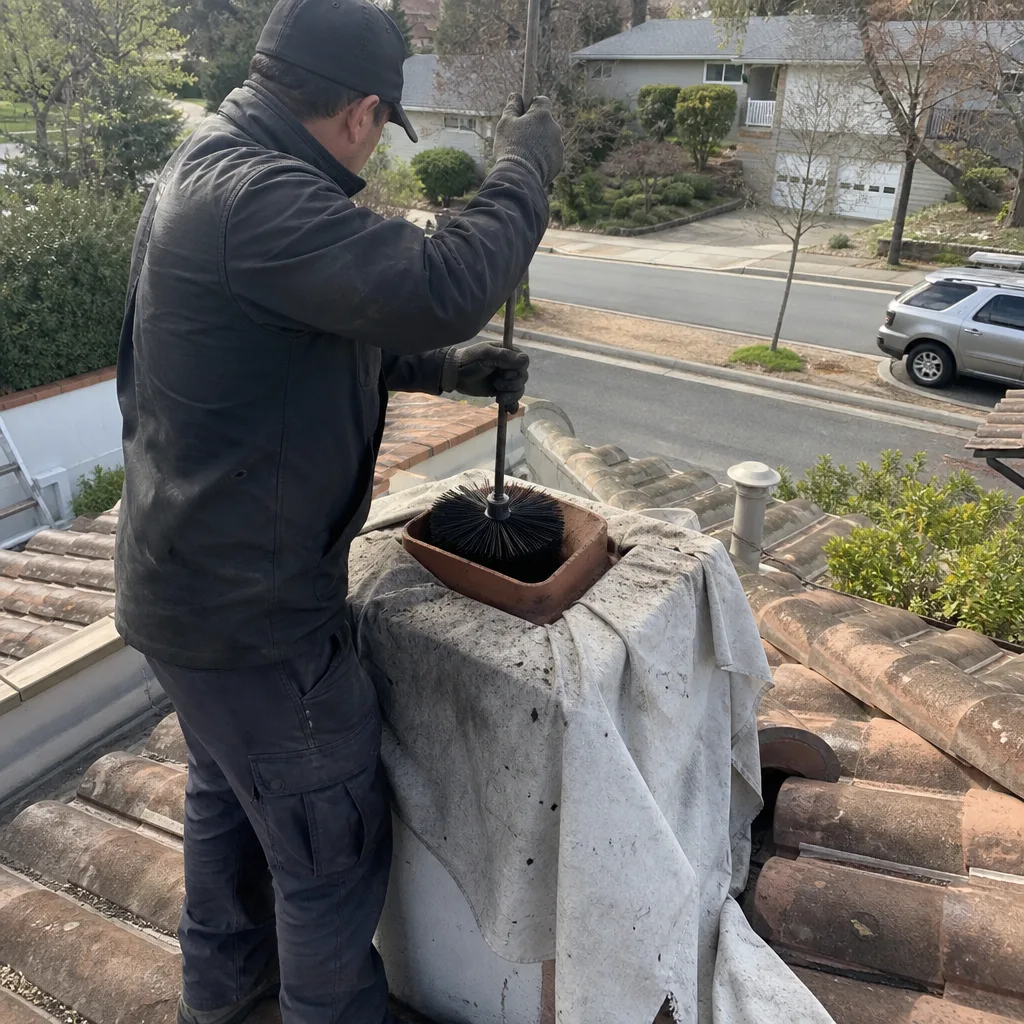
Sounds travel through chimney systems with surprising clarity. Each distinct sound has a distinct mechanism.
Popping or Ticking During Burn
The mechanism: Thermal expansion of a cracked flue liner or separated flue tiles. As the metal or clay heats, cracks open and close, creating sharp pops. In stainless steel liners, this can indicate a liner that was improperly sized or has detached from the top anchor.
The risk: Cracks allow combustion gases into wall cavities. The sound is the liner telling you it’s structurally compromised.
The response: Stop-use, camera inspection. We document crack pattern and location, then quote repair or replacement. In San Mateo’s seismic zone, we often find liner damage that predates the current homeowner’s purchase - undetected by standard inspections.
Scratching or Scrabbling Between Uses
The mechanism: Animal intrusion. Squirrels, raccoons, birds, or rats. The sound timing matters: daytime scratching suggests squirrels or birds; nocturnal activity suggests raccoons or rats. In San Mateo, roof rat activity peaks in October-November as temperatures drop.
The risk: Nesting material is combustible. Animals may also die in the flue, creating odor and secondary insect problems.
The response: Stop-use. We inspect with camera to identify species by nest structure, remove debris with specialized tools, and install code-compliant exclusion screening. Every removal is documented with before/after photos under Haven Standard Clause 4.
Rumbling or Howling During Wind
The mechanism: Air turbulence at the cap, or negative pressure oscillation in the flue. A howl usually indicates a cap that’s too small for the flue diameter, creating a venturi effect. Rumbling suggests the cap is missing or damaged, allowing wind to enter the flue directly.
The risk: Wind-driven rain enters an uncapped or poorly capped flue, accelerating all moisture-related damage.
The response: Visual inspection from ground or roof to assess cap condition. We quote replacement with properly sized cap from Famco or Copperfield, specified by part number in the written scope.
The Documentation Threshold: Clean-and-Monitor vs. Immediate Stop-Use
Not every warning sign demands emergency response. The critical distinction is whether the sign indicates an active hazard during operation, or a developing condition that can be scheduled. We’ve formalized this after 38,000 inspections:
Clean-and-Monitor Signs
These conditions warrant scheduling a sweep and inspection, but don’t require canceling tonight’s fire:
- Stage 1 creosote (dry, flaky, easily brushed) under 1/8″ thickness
- Minor efflorescence without spalling or mortar loss
- Musty smell that resolves when damper is closed
- Single missing cap screen (but not missing cap)
- Previous inspection documented condition unchanged
For these, we schedule NFPA 211 Level 2 inspection with cleaning, document baseline condition with photo record, and set recall for next annual inspection.
Immediate Stop-Use Signs
These conditions mean no fire until inspection is completed and written clearance is issued:
- Any Stage 2 or 3 creosote
- Visible cracks in flue tiles or liner
- Smoke rollback during normal operation
- Rust on firebox components indicating water entry
- Animal intrusion or nesting material
- Spalling with exposed mortar joints
- Any wall discoloration or heat damage near chimney
- Fire that won’t establish draft with proper technique
What to Document Before Calling
The most effective call you can make includes:
- Photos from ground level of any visible exterior signs
- Written notes on when the sign appeared and whether it’s changing
- Frequency and conditions of any smell or draft issue - “every morning,” “only when it rains,” “started after we replaced the windows”
- Last professional service date and company name, if known
- Your home’s construction era and any renovations - this context shapes our inspection approach
With this documentation, we can often narrow the likely mechanism before arrival, making our inspection more focused and your written quote more accurate. Under Haven Standard Clause 1, that written quote arrives before any work starts - never after we’re in your home.
For Fireplace Services in San Mateo that include full diagnostic workups, we apply the same documentation standard: photo record, written scope, written price, written warranty.
Common Mistakes to Avoid
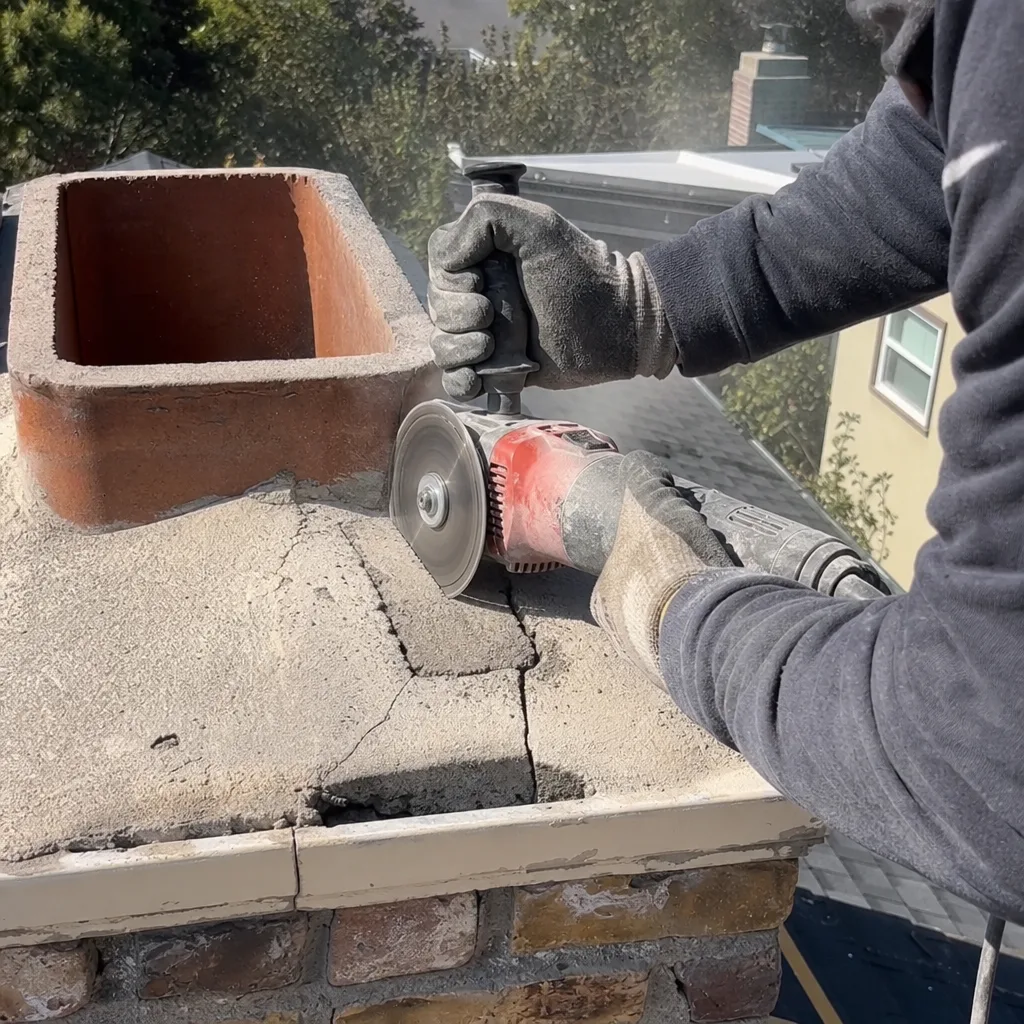
- Assuming a “clean” firebox means a clean flue. The firebox is where you see; the flue is where the hazard lives. We’ve inspected San Mateo homes with immaculate brick fireboxes and 3/4″ of glazed creosote 15 feet up.
- Using chimney cleaning logs as a substitute for mechanical sweeping. These products can loosen creosote but don’t remove it. In some cases, they convert Stage 1 to Stage 2 by partial heating. They’re a maintenance supplement, not a replacement for inspection and mechanical cleaning.
- Ignoring seasonal smell changes. A fireplace that smells different in winter than summer has a moisture or pressure problem that’s worsening. San Mateo’s marine climate makes this easy to dismiss as “just damp weather.”
- Hiring based on lowest price without verifying what’s included. A $99 sweep that doesn’t include camera inspection, photo documentation, or written condition report leaves you with no evidence if problems develop. Under the Haven Standard, these are default inclusions, not upsells.
- Waiting for “the burning season” to schedule. In San Mateo, October-December booking compresses into six weeks. Warning signs discovered in September can be addressed with normal scheduling; the same sign in November means waiting three weeks with a stop-use condition.
- Accepting verbal scope without written documentation. If a contractor tells you the liner “looks fine” or the creosote “isn’t too bad,” ask for the photo. Haven Standard Clause 4 exists because verbal assessments are unverifiable and often forgotten.
- Assuming new home purchase inspection covered the chimney. General home inspectors visually examine accessible portions of the chimney exterior. They don’t camera-inspect the flue, measure creosote thickness, or evaluate liner condition. We’ve found critical defects in chimneys that passed standard home inspection within the year.
When to Call a Professional
Call when any stop-use sign appears, when any warning sign changes or worsens, or when it’s been more than 12 months since your last NFPA 211 Level 2 inspection with photo documentation. In San Mateo, where marine moisture and seismic settling create conditions we don’t see inland, annual inspection isn’t conservative - it’s calibrated to actual local failure rates.
Level Two Chimney San Mateo offers free estimates in San Mateo. Our process: live person answers your call, schedules a window, assigns a named technician who texts when en route, performs camera-scan inspection under NFPA 211 Level 2, and delivers written price, written scope, and written warranty before any work begins. Every job is backed by the 365-Day Done Right Promise. Call (650) 600-3117 or start at our Level Two Chimney San Mateo home page.
Frequently Asked Questions
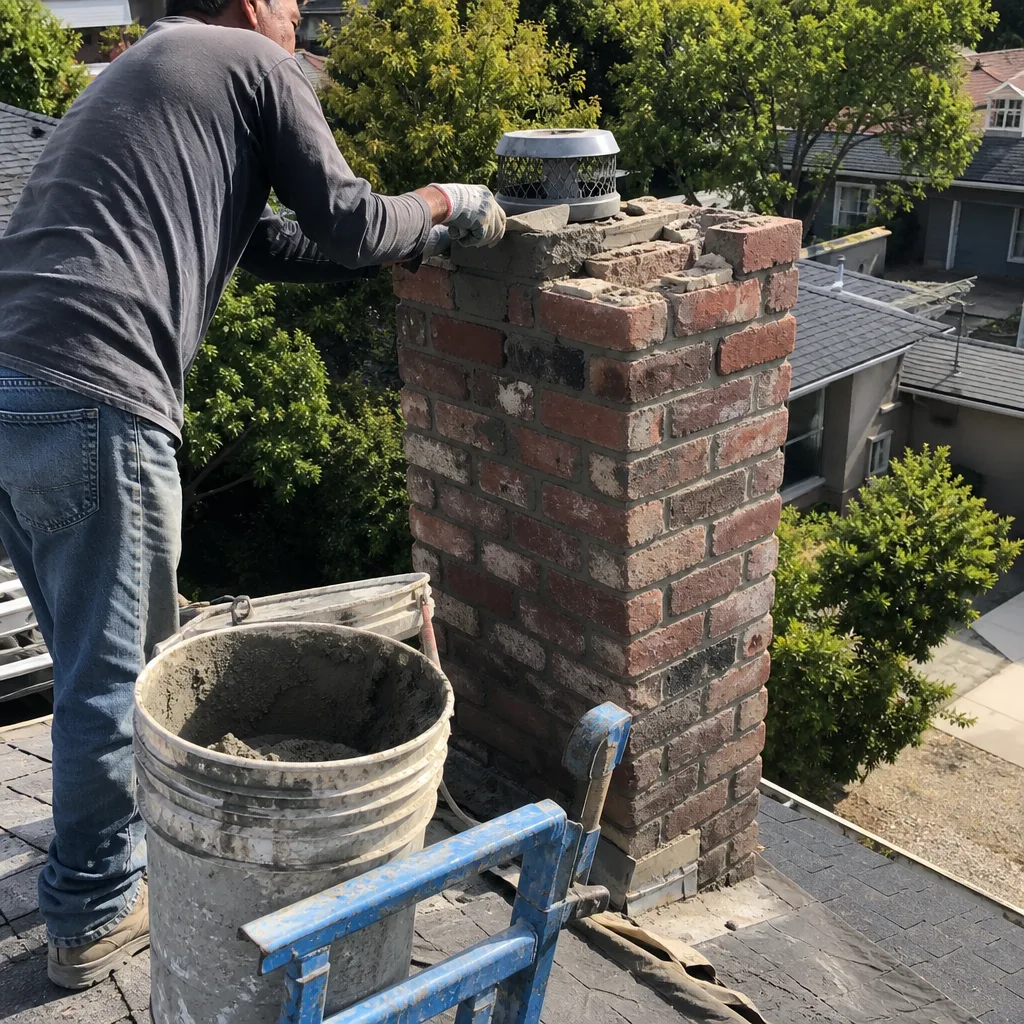
A standard NFPA 211 Level 2 chimney sweep and inspection in San Mateo typically runs $280-$420, depending on flue configuration, accessibility, and creosote stage. Stage 2 or 3 creosote removal, chemical treatment, or liner conditions requiring additional service are quoted separately in writing before any work proceeds. We don’t quote over the phone for conditions we haven’t seen - but we don’t charge for the estimate, and we deliver written price on site before work starts under Haven Standard Clause 1. Call (650) 600-3117 to schedule.
You need a new liner if the existing one is cracked, separated, or corroded to the point of compromising containment - and you need camera inspection to know. We don’t recommend liner replacement without photo evidence you can see for yourself. In some cases, a damaged clay tile liner can be repaired with HeatShield cerfractory foam rather than full replacement; we quote both options when applicable. If a contractor recommends replacement without showing you camera footage of the specific damage, get a second opinion. Our Free Second Opinion on any written estimate is always available.
NFPA 211 recommends annual inspection; cleaning frequency depends on use and fuel. A wood-burning fireplace used as primary heat source may need sweeping after every cord of wood. Occasional weekend use often extends to every 2-3 years if inspection shows Stage 1 creosote only. San Mateo’s moisture-rich climate accelerates deterioration, so we recommend annual inspection even for light-use chimneys - the inspection determines whether cleaning is actually needed that year.
The most common outcome is progressive creosote accumulation, eventually reaching Stage 3 glazed deposits that require expensive chemical-mechanical removal rather than standard sweeping. Less common but more serious: undetected liner cracks allow combustion gases into wall cavities, causing carbon monoxide risk or structural damage; water entry destroys masonry from within; and chimney fires from ignited creosote cause an average $12,000-$25,000 in damage nationally, often with insurance complications if inspection records are absent. The documented photo record we provide under Haven Standard Clause 4 protects your insurability.
Rain cools the flue and increases humidity, which activates odor compounds in creosote and can reverse normal air flow. If your San Mateo home has been weatherstripped or window-upgraded, negative pressure may pull those odors down into living space. The smell isn’t “just rain” - it’s a signal that your flue has significant creosote load, water entry, or pressure imbalance. Camera inspection identifies which mechanism is dominant.
A flashlight from the firebox shows you the first 2-3 feet of flue, which is the least informative section. You cannot see creosote thickness, tile cracks, or liner corrosion from this angle. You cannot evaluate the smoke chamber, the flue’s full height, or the crown condition. We’ve found critical defects 15 feet up in chimneys that looked “fine” from below. NFPA 211 Level 2 requires specialized camera equipment and training - it’s not a DIY assessment.
The Bottom Line
Chimney warning signs in San Mateo homes develop through specific, knowable mechanisms: water cycling through marine-dampened masonry, creosote progressing through documented stages, and house envelope changes altering pressure relationships that fireplaces depend on. The signs are readable if you know what to look for, what to smell for, and what to listen for. The critical skill isn’t recognizing danger - it’s knowing which signs mean schedule-soon and which mean stop-now, then demanding documentation that proves the distinction. That’s what the Haven Standard was built for: written price before work, photo record after, and a 365-Day Done Right Promise that means something because it’s attached to evidence you can see.
Written by Corrine Halstead, Owner at Level Two Chimney San Mateo, serving San Mateo since 2009.